

Reimagining Energy on Wheels
The Potential and Engineering Behind the Hydrogen-Powered Vehicle Revolution
The Emergence of Hydrogen as a Clean Energy Carrier
The concept of hydrogen-powered transportation represents one of the most ambitious pursuits in sustainable mobility. Hydrogen, the most abundant element in the universe, offers an immense potential to reshape how energy is generated, stored, and utilized. Unlike fossil fuels, hydrogen produces no carbon dioxide when used in fuel cells, emitting only water vapor. This clean byproduct positions it as a cornerstone of future energy strategies aimed at decarbonization. Early applications in aerospace and industrial systems demonstrated hydrogen’s high energy density and versatility, inspiring automotive engineers to adapt it for vehicular propulsion. In modern vehicles, hydrogen is converted into electricity through an electrochemical reaction inside fuel cells, bypassing combustion altogether. This reaction produces instant torque, silent performance, and exceptional efficiency compared to internal combustion engines. The emergence of hydrogen as a mobility fuel marks not only a technological transition but also a philosophical one, redefining humanity’s relationship with energy and the environment through innovation and scientific precision.
The Engineering Principles Behind Hydrogen Fuel Cells
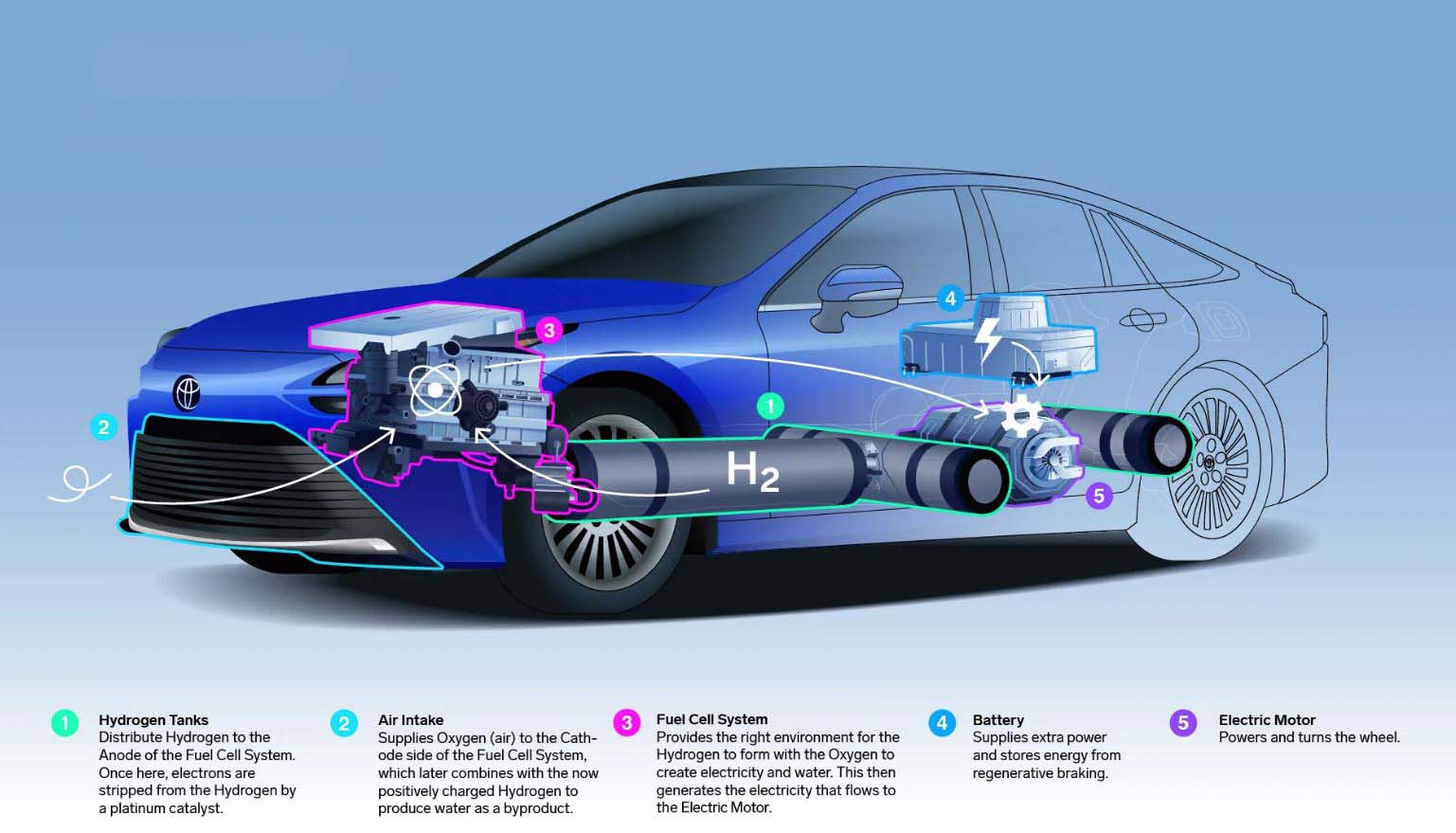
Hydrogen fuel cell vehicles operate through a sophisticated process that blends chemistry, thermodynamics, and advanced control systems. At the core lies the proton exchange membrane fuel cell, which facilitates the reaction between hydrogen and oxygen to generate electricity. Hydrogen enters the anode side, where it splits into protons and electrons. The protons pass through a polymer electrolyte membrane while the electrons flow through an external circuit, creating an electric current that powers the vehicle’s motor. Oxygen from the air combines with the protons and returning electrons at the cathode to form water, the only exhaust product. Engineers have refined this process through lightweight materials, nanostructured catalysts, and improved water management systems that enhance performance across varying temperatures. The integration of regenerative braking and smart power distribution further optimizes efficiency. The hydrogen fuel cell’s modular architecture allows scalability across different vehicle classes, from compact cars to heavy-duty trucks, symbolizing a convergence of chemistry and mechanical ingenuity in automotive design.
The Infrastructure Challenge and Global Investment Landscape
Despite its engineering promise, the success of hydrogen vehicles depends on the establishment of a robust refueling infrastructure. Hydrogen must be produced, stored, and distributed safely at scale, requiring collaboration between governments, energy companies, and manufacturers. Currently, the majority of hydrogen stations are concentrated in regions like Japan, South Korea, Germany, and California, where early adoption programs have aligned with national decarbonization policies. Expanding this network involves complex logistics because hydrogen storage demands high pressure or cryogenic conditions. Recent innovations in solid-state storage materials and modular fueling systems have reduced costs and improved reliability. Investment is shifting toward green hydrogen, generated from renewable electricity through electrolysis, which eliminates fossil fuel dependency in production. Global partnerships among automotive and energy sectors are now focusing on standardization and interoperability to ensure that refueling systems maintain consistent pressure and flow across brands and models. Infrastructure development stands as both the greatest obstacle and the most crucial enabler of hydrogen mobility’s global viability.
Comparative Analysis with Electric and Combustion Technologies
Hydrogen vehicles occupy a unique position between conventional combustion and battery-electric systems. While electric vehicles rely on stored energy in lithium-ion batteries, hydrogen fuel cells generate electricity on demand, enabling faster refueling and extended range. This difference makes them particularly attractive for long-haul transportation and commercial applications where downtime equates to financial loss. In contrast, battery systems require significant charging time and can suffer from reduced performance under cold conditions. However, hydrogen’s advantages come with trade-offs. Energy conversion efficiency is lower compared to direct electric drive due to the multiple stages of electrolysis, compression, and fuel cell conversion. Infrastructure and production costs remain high, though they are declining as economies of scale improve. From an engineering standpoint, hydrogen technology represents a complementary solution rather than a replacement, expanding the spectrum of sustainable propulsion options. This diversification of energy systems creates resilience in global transport networks and supports the broader transition toward carbon neutrality.
Hydrogen Production and the Path to Green Supply
The environmental integrity of hydrogen vehicles depends largely on how the fuel itself is produced. Conventional hydrogen, often referred to as gray hydrogen, is derived from natural gas through steam methane reforming, a process that emits significant carbon dioxide. Blue hydrogen mitigates this by integrating carbon capture and storage technologies, reducing atmospheric impact. The ultimate goal, however, is green hydrogen, produced via electrolysis powered by renewable sources like solar or wind. This process splits water into hydrogen and oxygen without any emissions. Recent advancements in electrolyzer design, including proton exchange membrane and solid oxide technologies, have dramatically improved efficiency and scalability. Large-scale projects in Europe, the Middle East, and Asia are demonstrating how renewable energy can directly feed hydrogen production facilities, turning surplus electricity into a storable fuel. As global grids decarbonize, green hydrogen will become the cornerstone of sustainable transport and industrial decarbonization, bridging the gap between energy production and consumption with ecological accountability.
Applications Beyond Passenger Vehicles
The potential of hydrogen extends far beyond private mobility. Heavy transportation sectors, including freight logistics, maritime shipping, and aviation, stand to benefit from hydrogen’s high energy density and rapid refueling capabilities. Fuel cell trucks are already in operation across key logistics corridors, delivering comparable range and payload capacity to diesel vehicles with zero tailpipe emissions. In the maritime industry, hydrogen and its derivative, ammonia, are being explored as alternatives to bunker fuel, reducing the sector’s carbon footprint. Aviation companies are experimenting with hydrogen combustion turbines and fuel cell-electric hybrid systems for regional aircraft, envisioning commercial hydrogen-powered flights within the next decade. Urban transit networks are adopting hydrogen buses that provide silent, emission-free operation with long operational cycles. These multi-sectoral applications reinforce hydrogen’s strategic role in building a cohesive clean-energy ecosystem, transforming not just individual vehicles but entire systems of mobility across land, sea, and air.
Economic and Policy Dynamics Driving Adoption
Government policies and economic incentives are pivotal to accelerating hydrogen adoption. Countries with strong commitments to net-zero targets are implementing national hydrogen strategies that combine subsidies, tax benefits, and infrastructure grants. The European Union’s Hydrogen Strategy and Japan’s Basic Hydrogen Roadmap exemplify long-term frameworks designed to integrate hydrogen into transportation, industry, and energy markets. Financial institutions and investors are recognizing hydrogen’s potential as a scalable clean asset class, leading to a surge in funding for startups and consortiums. The creation of carbon pricing mechanisms and emissions trading systems increases competitiveness for low-carbon fuels. Furthermore, international collaboration is fostering the establishment of global hydrogen supply chains, connecting renewable-rich regions with energy-demand centers through liquefied hydrogen shipping. Policymakers are increasingly viewing hydrogen as not merely a fuel but an instrument of economic transition, capable of generating jobs, reducing energy dependence, and reinforcing climate commitments simultaneously.
Safety, Public Perception, and Technological Maturity
Public acceptance plays a crucial role in the long-term viability of hydrogen transportation. Although hydrogen is highly flammable, modern engineering has developed containment systems that make it as safe as conventional fuels. Vehicles utilize multi-layered carbon-fiber tanks designed to withstand extreme pressure and impact. Leak detection sensors and automatic shutdown protocols ensure rapid containment in case of irregularities. Educational campaigns and transparent safety data are essential to counter misconceptions stemming from early hydrogen experiments. The maturity of fuel cell technology has advanced significantly over the past decade, with major automakers demonstrating millions of kilometers of real-world reliability. Maintenance requirements are minimal due to the absence of mechanical combustion, while durability continues to improve with new membrane materials. The evolution of safety standards and public understanding will determine the pace at which hydrogen vehicles achieve mainstream confidence, ultimately shaping their integration into the broader mobility ecosystem.
The Future Integration of Hydrogen Mobility
The trajectory of hydrogen vehicles points toward integration rather than isolation within the global energy transition. As battery-electric, hybrid, and fuel cell technologies coexist, hydrogen will find its optimal niche in sectors demanding range, resilience, and refueling efficiency. The convergence of smart grid management, renewable hydrogen production, and autonomous transport will create an interconnected mobility web that adapts dynamically to demand and resource availability. Innovations in synthetic fuel production and hydrogen blending within natural gas pipelines will further extend its impact beyond transportation. Future cities may deploy hydrogen-powered logistics hubs and public fleets managed through AI-based optimization, ensuring that energy distribution aligns with real-time sustainability goals. The vision of a hydrogen-driven world rests not only on scientific achievement but on the collaboration of governments, industries, and communities. The future of mobility will be defined by diversity, integration, and a shared commitment to reimagining energy as a tool for collective progress.