

From Chemistry to Charge The New Age of Battery Design
Next-Generation Batteries Are Transforming Energy Storage and Mobility
The Evolution of Energy Storage
The history of energy storage has evolved in tandem with human progress, marking each era with a leap in capability and imagination. The earliest cells, crude and unpredictable, provided sparks of discovery that eventually became the foundation of industrial power. Lead-acid batteries gave mobility to the first automobiles and introduced the idea that energy could be carried rather than tethered. Nickel-cadmium cells refined this principle for tools and aircraft, establishing durability as a design priority. The introduction of lithium-ion chemistry revolutionized portable electronics, transforming devices into extensions of human activity. Each step in this evolution represented not only chemical refinement but also cultural transformation, redefining convenience, independence, and environmental responsibility. As we enter a period defined by electrification and sustainability, energy storage has transcended its utilitarian roots to become a symbol of innovation itself. The battery now represents the interface between scientific potential and social ambition, carrying the pulse of progress within its compact frame.
The Chemistry of Advancement
Modern battery chemistry is an intricate dialogue between elements, electrons, and energy. The challenge lies in achieving balance between power density, stability, and recyclability. Traditional lithium-ion systems, though powerful, face constraints in raw material availability and thermal control. This has prompted researchers to explore alternatives such as sodium-ion, magnesium-ion, and lithium-sulfur technologies. Sodium-ion batteries benefit from the abundance of their primary element, making them a viable option for large-scale storage despite lower specific energy. Lithium-sulfur systems, by contrast, offer extraordinary capacity but struggle with degradation due to polysulfide shuttling. Engineers have begun designing cathodes coated with carbon matrices to contain and recycle active material, dramatically extending life cycles. Meanwhile, aqueous zinc-ion cells are gaining traction for stationary applications where safety outweighs energy density. The chemistry of advancement is defined not only by material science but by creative problem-solving, where the molecular structure of each component becomes an opportunity to reimagine the rules of energy transformation.
Solid-State Batteries and the Next Frontier
Solid-state batteries stand at the forefront of the next great technological revolution in energy storage. By eliminating flammable liquid electrolytes, they offer inherent safety and the potential for unparalleled energy density. The transition from concept to commercialization, however, is not simple. Engineers must overcome challenges related to interface resistance, ion conductivity, and manufacturing uniformity. Companies such as Toyota, QuantumScape, and Solid Power are experimenting with sulfide-based, oxide-based, and polymer-based electrolytes to determine which composition offers the optimal trade-off between performance and cost. Early prototypes have already achieved remarkable energy retention and reduced charging times, indicating that mass adoption may not be far off. The implications for transportation are profound: electric vehicles could travel twice as far, recharge in minutes, and operate safely under extreme conditions. Beyond cars, solid-state technology could power drones, aircraft, and portable energy grids, transforming not just mobility but the architecture of modern power systems. The frontier of solid-state innovation represents a rare intersection of chemistry, physics, and industrial design working in perfect symmetry.
Nanotechnology and Material Innovation
Nanotechnology is redefining how batteries are built at every structural level. By engineering materials at the scale of billionths of a meter, scientists can enhance ion movement, conductivity, and thermal stability beyond traditional limits. Silicon anodes, once considered unstable due to expansion under cycling, are now stabilized through nanostructuring and elastic polymer binders that allow them to breathe during operation. Graphene-infused cathodes provide unprecedented conductivity, reducing internal resistance and improving charge distribution. Researchers are also using nanocoatings to protect electrodes from degradation caused by chemical side reactions, thereby extending lifespan dramatically. On the frontier of innovation, metal-organic frameworks and quantum dot interfaces are being studied for their potential to revolutionize charge dynamics. These microscopic advances yield macroscopic gains, enabling faster charging, lower heat generation, and higher voltage stability. Material innovation has transformed battery manufacturing into a precision science, where atomic geometry dictates global sustainability outcomes. Every layer, every bond, and every nanoscopic structure serves the grand objective of storing energy more intelligently and responsibly.
Battery Recycling and Circular Sustainability
The global shift toward electrification has magnified the urgency of responsible battery recycling. Each discarded cell contains valuable metals that, if improperly disposed of, can pollute ecosystems and squander limited resources. Conventional methods such as smelting recover materials at the expense of energy and environmental health. Emerging hydrometallurgical and direct recycling approaches recover cathode materials with minimal waste, preserving both economic and ecological value. Facilities are developing closed-loop systems that extract lithium, nickel, and cobalt for reuse in new cells without downgrading their quality. In Europe, policy frameworks now require producers to collect and recycle a specific percentage of used batteries, reinforcing the principle of extended producer responsibility. In parallel, manufacturers are designing packs for easier disassembly, allowing automated systems to separate components efficiently. Second-life applications are expanding, where retired EV batteries serve in stationary grid storage before final recycling. Circular sustainability ensures that every stage of a battery’s life contributes positively to the ecosystem, reflecting a mature industry aligned with environmental stewardship and ethical innovation.
Integration of Artificial Intelligence in Battery Design
Artificial intelligence has emerged as a catalyst for accelerating the pace of battery research. Machine learning algorithms can evaluate thousands of chemical permutations in moments, identifying the most promising combinations for further testing. Neural networks simulate degradation patterns to predict performance outcomes long before physical prototypes exist, saving years of experimentation. In active systems, AI-driven management software continuously monitors charge, temperature, and current flow, adjusting parameters to optimize longevity. Predictive diagnostics alert users before failure occurs, enhancing safety and reliability across vehicles, drones, and industrial systems. The use of AI in manufacturing allows for quality assurance at microscopic precision, detecting irregularities invisible to human inspection. Beyond performance, artificial intelligence plays a role in sustainability, modeling supply chain logistics and recycling efficiency to reduce waste and emissions. The partnership between data science and electrochemistry is revolutionizing how energy systems are designed, operated, and maintained. AI has effectively become the unseen engineer, guiding innovation toward a balance of intelligence, efficiency, and ecological responsibility.
Energy Density and the Quest for Ultimate Efficiency
The pursuit of higher energy density defines the competitive frontier of modern battery technology. For electric vehicles, greater density translates directly into range and versatility. Researchers are exploring lithium-metal, lithium-sulfur, and aluminum-air designs to achieve capacities that surpass the limitations of current lithium-ion standards. Lithium-metal batteries replace graphite anodes with pure lithium, offering significantly higher capacity but posing challenges related to dendrite formation that can cause short circuits. To combat this, scientists are developing electrolytes that promote uniform ion deposition, reducing the risk of structural failure. Lithium-sulfur systems, on the other hand, leverage lightweight elements to deliver theoretical capacities far beyond conventional chemistries, though controlling sulfur’s volatility remains complex. Aluminum-air batteries provide another pathway, using oxygen from the atmosphere as a reactant to minimize weight. In every case, the goal is to achieve the highest ratio of stored energy to mass without compromising safety. The race for efficiency embodies a deeper narrative about technological maturity, where progress is measured not by speed alone but by the capacity to sustain energy cleanly and intelligently.
Economic and Industrial Implications
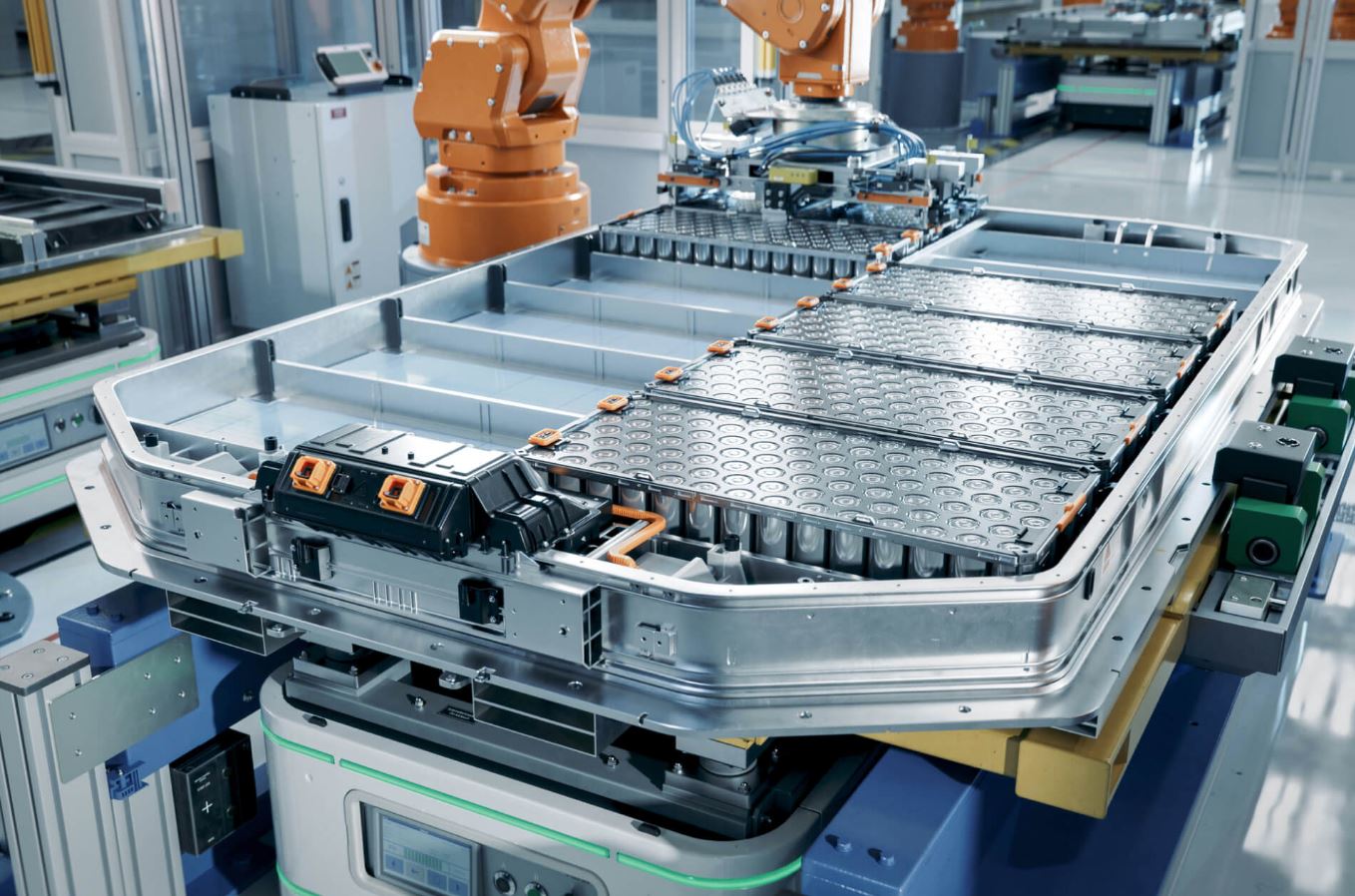
The economic landscape surrounding battery innovation extends across continents and industries. Gigafactories have become the physical embodiment of this transformation, serving as centers of automation, robotics, and digital synchronization. Each facility produces thousands of cells per hour, optimizing production through real-time analytics. Countries with rich mineral reserves are positioning themselves as key players in the global supply chain, prompting strategic partnerships between mining corporations and technology companies. This economic realignment is reshaping geopolitics, as nations compete to secure critical resources while investing in research independence. In parallel, the battery sector is stimulating job creation in engineering, data analysis, and renewable infrastructure. Financial institutions are channeling billions into energy storage startups, recognizing batteries as the cornerstone of the 21st-century economy. The cost per kilowatt-hour has dropped by more than 85 percent over the past decade, bringing electric mobility within reach for mainstream consumers. Industrial ecosystems are forming around battery innovation, linking raw material extraction, recycling, manufacturing, and software management into a seamless chain of progress.
The Future Landscape of Power Storage
The next era of energy storage will integrate technology, sustainability, and intelligence into a single ecosystem. Batteries will become not only sources of power but also participants in energy dialogue, communicating with grids, homes, and vehicles in real time. Advances in quantum modeling will allow scientists to design materials with precision previously thought impossible, predicting molecular interactions before they occur. Self-repairing electrodes, bio-inspired electrolytes, and temperature-adaptive casings will extend operational life while minimizing environmental stress. Wireless energy transfer will eliminate cables entirely, enabling vehicles to charge while in motion and cities to distribute power seamlessly between infrastructure nodes. Integration with renewable energy will transform batteries into balancing agents, storing excess solar and wind energy to stabilize grids globally. Artificial intelligence will orchestrate this harmony, optimizing resource allocation and predicting demand fluctuations across entire regions. The future of power storage will redefine civilization’s relationship with energy, creating a world where access is universal, generation is sustainable, and consumption is guided by intelligence. In this future, every charge will carry the promise of progress, and every discharge will reflect humanity’s capacity to evolve responsibly.