

Beyond Resistance How Aerodynamics Shapes Efficiency, Stability, and Style
Understanding the Science, Design, and Engineering that Define Modern Vehicle Aerodynamics
The Foundation of Aerodynamic Design
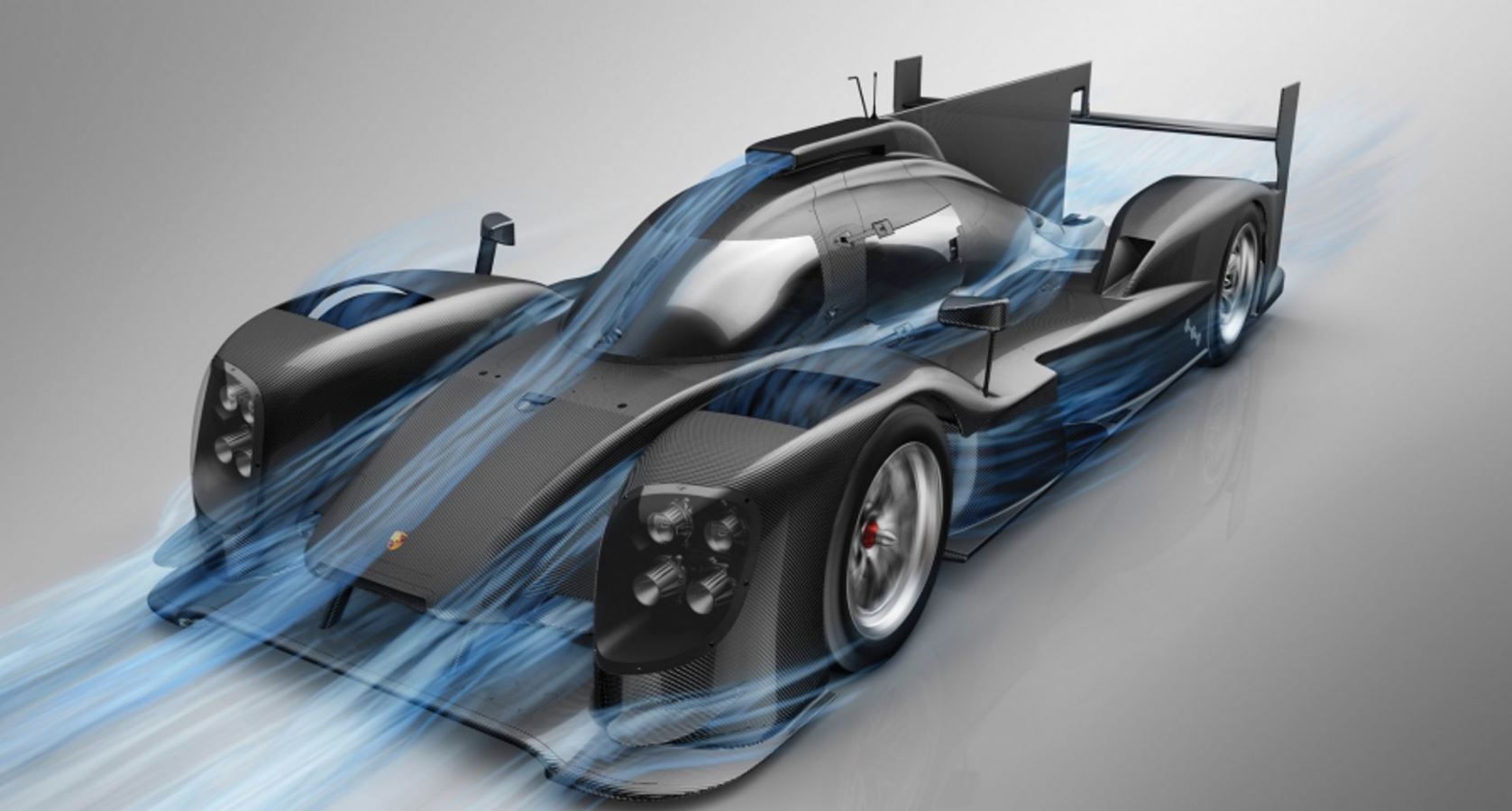
Aerodynamics is the art and science of controlling air movement around a vehicle to achieve balance, efficiency, and stability. Every modern car, from a fuel-efficient compact to a world-class racing machine, owes its performance to how effectively it slices through air. The primary objective is to minimize drag, the resistance that slows a vehicle as it moves through the atmosphere, while maximizing downforce, the force that presses it to the ground for grip and control. Engineers study airflow through simulations and wind tunnels, adjusting every curve, vent, and contour to refine performance. A vehicle’s exterior shape becomes a dynamic system, where even the smallest alteration can influence speed, handling, and fuel consumption. The body must guide air smoothly from front to rear, minimizing turbulence and creating pressure zones that favor stability. This scientific precision transforms design into motion, where every detail, from mirror placement to underbody panels, contributes to a coherent aerodynamic identity that defines the car’s behavior at every velocity.
The Historical Evolution of Automotive Aerodynamics
The relationship between vehicles and air is as old as the automobile itself, though it took decades for aerodynamics to be understood as a defining engineering discipline. Early car design prioritized aesthetics and mechanical function, with little concern for airflow. The concept of streamlining emerged in the 1920s and 1930s as engineers began observing how aircraft sliced through the air. Designers like Paul Jaray and Wunibald Kamm pioneered shapes that reduced drag, giving rise to the teardrop form and the famous “Kammback” tail design that influenced generations of vehicles. In motorsport, aerodynamics became a weapon of competition. The addition of wings, diffusers, and spoilers revolutionized performance, enabling higher cornering speeds and stability. The lessons learned on the track filtered into road car design, transforming production vehicles into more efficient machines. Today, aerodynamic efficiency is no longer the domain of race teams but a universal priority in the automotive world, shaping electric vehicles, sports cars, and even family sedans into wind-sculpted masterpieces of motion and balance.
The Core Principles of Airflow Management
To understand aerodynamics, one must first understand airflow behavior. As a vehicle moves, air splits at the front and travels around its surfaces, creating zones of pressure. Engineers seek to maintain laminar flow, smooth and predictable movement, while avoiding turbulence that increases resistance. Drag consists of two main types: pressure drag, caused by the difference in air pressure between the front and rear, and friction drag, caused by air sliding over the surface. Reducing both requires meticulous control of shape, angle, and surface texture. Downforce is the other essential principle, ensuring that the vehicle remains grounded even at high speeds. By manipulating airflow over wings, diffusers, and splitters, engineers create suction that presses tires firmly onto the pavement. Balance between front and rear downforce ensures predictability, especially during cornering. Aerodynamic mastery lies in achieving these opposing goals, reducing drag while increasing downforce, without compromising stability or efficiency. The result is a delicate equilibrium that transforms air from resistance into an ally.
The Role of Computational Fluid Dynamics and Wind Tunnel Testing
Modern aerodynamics is driven by data. Computational Fluid Dynamics, or CFD, allows engineers to simulate airflow virtually, long before physical prototypes exist. Using advanced mathematical models, they can visualize how air moves across every surface, predicting pressure zones and turbulence patterns in microscopic detail. CFD saves time and cost, enabling iterative design improvements quickly and accurately. However, simulations are only part of the story. Wind tunnels remain the ultimate proving ground, where physical models are tested under controlled conditions. Engineers use smoke visualization, laser sensors, and pressure mapping to confirm the behavior predicted by simulations. The combination of CFD and wind tunnel testing creates a feedback loop of refinement, where theory meets reality. The results are measurable: reduced drag coefficients, optimized lift balance, and improved stability across varying speeds. This process is what allows modern cars to achieve feats once impossible, turning the invisible world of air into a tangible component of automotive performance and artistry.
Design Elements that Shape Aerodynamic Efficiency
The visible design of a vehicle is a reflection of its aerodynamic intent. Every curve, vent, and surface is sculpted with purpose. The front fascia directs air efficiently toward the sides and over the hood, while active grille shutters close at high speeds to reduce drag. The roofline’s slope guides air to the rear, minimizing pressure buildup. The rear end is particularly critical; a poorly designed tail section can create turbulence that negates all previous gains. Rear diffusers manage airflow under the vehicle, accelerating it to reduce pressure and create downforce. Spoilers and wings balance forces by controlling air separation. Even small details such as wheel design and side mirror shape play crucial roles. Some manufacturers use vortex generators to manipulate airflow intentionally, directing it where it can be most effective. In electric vehicles, where efficiency dictates range, these refinements become even more vital. The best aerodynamic design achieves harmony, visually compelling, functionally efficient, and perfectly attuned to the laws of fluid motion.
The Connection Between Aerodynamics and Efficiency
Every drop of fuel and every kilowatt of energy is influenced by aerodynamics. The amount of energy required to overcome air resistance grows exponentially with speed, making efficiency dependent on drag reduction. At highway velocity, nearly half of a car’s energy is spent pushing air aside. By lowering the drag coefficient, engineers can dramatically improve fuel economy and range. This is particularly critical for electric vehicles, where aerodynamic optimization can extend range by significant margins without increasing battery capacity. Streamlined bodies, smooth undertrays, and reduced frontal areas are all strategies employed to minimize energy loss. Even ride height affects performance; lowering a vehicle reduces turbulence beneath the chassis. The pursuit of aerodynamic efficiency thus aligns with sustainability, offering both environmental and performance benefits. The elegance of this approach lies in its dual nature, it conserves energy while enhancing experience. In the language of modern engineering, aerodynamic efficiency has become not just a tool of speed but a responsibility of progress.
Performance, Stability, and the Emotional Aspect of Aerodynamics
While the science of aerodynamics revolves around physics, its effects resonate deeply with emotion. A well-balanced vehicle feels alive, stable, and responsive, even at the limits of speed. Downforce transforms handling, enabling drivers to maintain control in conditions that would otherwise defy possibility. High-speed cornering, rapid lane changes, and braking all depend on aerodynamic integrity. Yet beyond performance, aerodynamics shapes the way a vehicle feels and sounds. The reduction of wind noise enhances comfort, while predictable handling builds confidence. Sports cars use airflow not only for control but for character, channeling air through resonant chambers to enhance engine sound or cooling efficiency. The emotional impact is subtle yet profound, connecting driver and machine through the language of sensation. Aerodynamics makes performance accessible, not through brute power but through balance. It turns invisible physics into tangible emotion, transforming air into art. This harmony between function and feeling is what defines great automotive design, merging intellect with instinct.
The Future of Aerodynamic Innovation
The next chapter in aerodynamics will redefine how vehicles move through air. As sustainability, electrification, and automation shape the automotive landscape, engineers are exploring adaptive systems that evolve in real time. Active aerodynamics, movable spoilers, dynamic ride height, and intelligent air channels, are already revolutionizing how vehicles respond to changing conditions. Materials like shape-memory alloys and smart polymers may soon allow surfaces to morph automatically for optimal airflow. Autonomous vehicles introduce new challenges, as sensors and cameras disrupt smooth design lines, requiring innovative airflow management solutions. Artificial intelligence is also transforming development, allowing simulations to learn from millions of airflow patterns to predict optimal configurations instantly. Furthermore, as energy efficiency becomes the new measure of performance, aerodynamic design will extend beyond vehicles to encompass entire transportation ecosystems, from charging stations to roadway materials. The future belongs to cars that not only move efficiently through air but collaborate with it, creating symbiotic relationships between machine and environment that embody the evolution of intelligent mobility.
The Everlasting Dance Between Air and Motion
Aerodynamics will always remain the invisible artist behind the visible masterpiece. It governs how vehicles cut through the atmosphere, shaping both their behavior and their beauty. The pursuit of aerodynamic perfection is not a destination but a continuous journey, guided by physics and imagination alike. As vehicles become smarter, cleaner, and faster, air remains the ultimate companion and challenge. To master aerodynamics is to understand motion itself, to find the balance between resistance and flow, between technology and art. Every gust of wind, every contour of design, every sensation of stability tells a story written in invisible ink. The greatest achievements in automotive history have always been those that understood this dance, treating air not as an obstacle but as a partner in creation. The legacy of aerodynamics will endure as long as humanity continues to move, reminding us that every shape, every speed, and every dream begins with the simple elegance of air in motion.