

Engineering for Survival How Innovation Shapes the Future of Automotive Safety
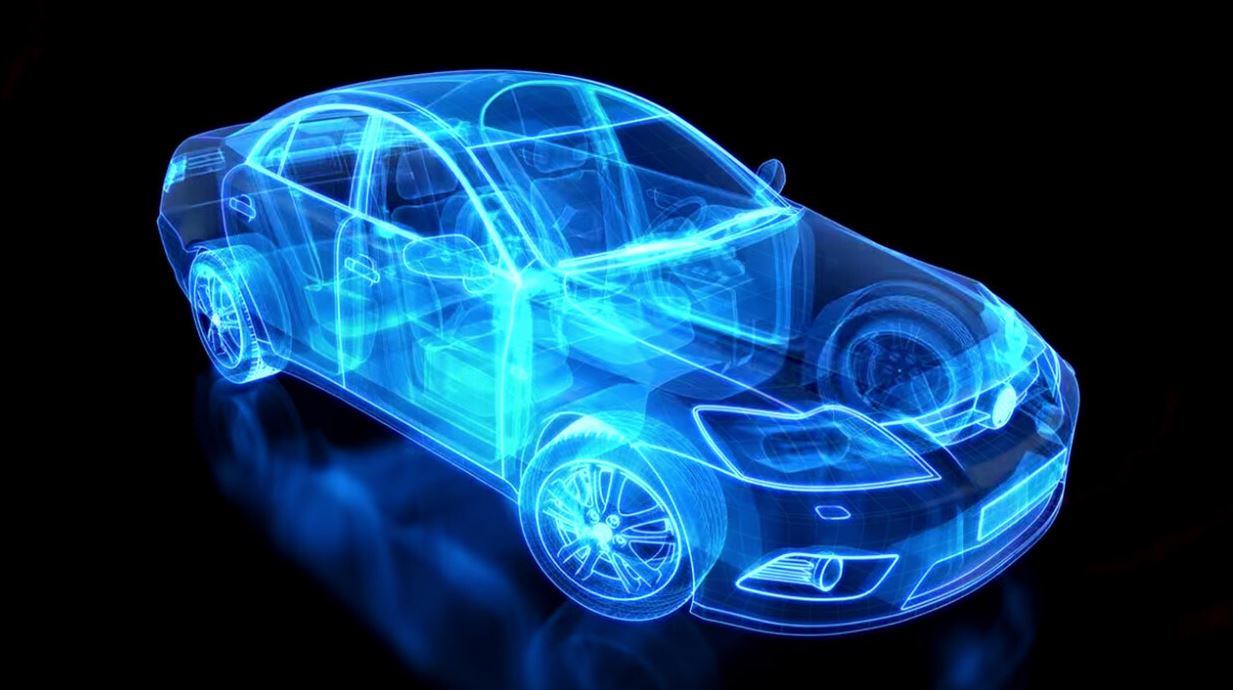
The Evolution, Technology, and Philosophy Behind Modern Automotive Safety Systems
The Origins of Safety in Motion
Automotive safety began not with complex electronics but with simple mechanical insight. The earliest automobiles prioritized mobility over protection, with open cabins, minimal braking systems, and little regard for occupant restraint. The evolution of safety began with necessity as speed increased and collisions became inevitable. Innovations such as laminated glass, steel frames, and the first mechanical brakes set the foundation for safer vehicles. In the 1950s, pioneers like Nils Bohlin revolutionized the industry by introducing the three-point seat belt, a seemingly modest invention that has saved millions of lives. From that moment, the pursuit of safety became a permanent objective in automotive engineering. The shift from reactive to proactive safety changed how vehicles were designed, influencing everything from structural rigidity to the psychology of driver behavior. This historical progression tells a story not of technological leaps alone but of cultural transformation, where safety became synonymous with progress, responsibility, and trust.
The Principles of Passive Safety
Passive safety systems form the core defense when accidents occur. They are designed to minimize injury during impact by absorbing energy and managing the forces that reach occupants. The modern car body acts as a controlled deformation zone, engineered to crumple strategically and redirect kinetic energy away from passengers. Inside the cabin, restraint systems like seat belts, airbags, and head restraints form an integrated shield. Airbags deploy in milliseconds, cushioning the human body while preventing secondary impacts within the vehicle. Even materials are chosen with intent, balancing stiffness with flexibility to preserve occupant space. Engineers rely on computer simulations and crash test data to refine designs that can handle countless scenarios, from frontal impacts to side collisions and rollovers. Passive safety is not visible to the driver in everyday use, yet it represents decades of data, human modeling, and structural experimentation that continue to evolve as new materials and design philosophies emerge in the pursuit of survivability.
The Rise of Active Safety Systems
Active safety focuses on prevention, intervening before danger becomes disaster. Unlike passive systems that protect during impact, active technologies aim to avoid collisions altogether. This transformation was made possible through electronic sensors, advanced computing, and real-time data processing. Systems like Anti-lock Braking (ABS), Electronic Stability Control (ESC), and Traction Control changed how cars behaved under duress, ensuring stability even when traction is compromised. The integration of radar, cameras, and ultrasonic sensors brought a new dimension, allowing vehicles to detect obstacles, pedestrians, and lane boundaries. Adaptive Cruise Control and Automatic Emergency Braking now operate seamlessly in the background, reducing driver fatigue and mitigating human error. These systems do not replace the driver but augment their capabilities, acting as a vigilant partner. As vehicles become more intelligent, the boundary between human decision and machine correction grows thinner, creating a cooperative safety framework that responds faster than instinct and learns faster than experience.
The Role of Artificial Intelligence in Safety Evolution
Artificial intelligence has transformed automotive safety from a rule-based discipline into a predictive one. Modern systems no longer rely solely on reactive programming but on machine learning that anticipates events. Cameras and sensors feed massive streams of data into onboard processors that interpret surroundings with remarkable precision. Pedestrian detection systems can distinguish between a person, an object, or an animal, adjusting braking or steering accordingly. AI-based algorithms in lane-keeping systems adapt to varying conditions, such as worn road markings or low visibility. The vehicle becomes a cognitive entity, capable of contextual understanding. These capabilities extend beyond individual cars into networked environments, where data shared between vehicles and infrastructure enables real-time hazard prediction. The fusion of AI with safety design redefines responsibility, emphasizing awareness and anticipation rather than reaction. Yet, with this evolution comes a philosophical challenge: ensuring that algorithms uphold ethical decision-making in split-second scenarios where lives depend on the balance between logic and morality.
The Psychology of Driver Assistance
Technology alone cannot guarantee safety without understanding human behavior. Driver assistance systems must navigate the delicate balance between support and control. If assistance is too intrusive, it breeds mistrust or overreliance; too passive, and its potential impact diminishes. Human-centered design principles guide the development of interfaces that communicate effectively without overwhelming the driver. Alerts must be intuitive, with tones, vibrations, and visual cues that convey urgency without inducing panic. Engineers and psychologists collaborate to model cognitive load, studying how drivers respond under stress. Adaptive interfaces now personalize warnings based on driver patterns, creating a symbiotic relationship between human and machine. For instance, drowsiness detection monitors eye movement and steering input, alerting when attention fades. The goal is not to replace the human driver but to augment awareness and reaction time. As autonomy advances, understanding this psychology becomes vital, ensuring that safety remains an interactive partnership rather than a transfer of responsibility.
Structural Safety and Material Innovation
The structural design of vehicles represents the physical backbone of safety. Every beam, panel, and joint contributes to how a vehicle absorbs and redistributes energy. Engineers now employ a mix of materials to achieve both strength and flexibility. High-strength steel, aluminum, carbon fiber, and composite alloys form complex architectures designed to maintain cabin integrity. Computer-aided engineering tools allow designers to test thousands of crash scenarios digitally, identifying stress points and optimizing reinforcement placement. Innovations such as multi-load paths ensure that energy disperses evenly, preventing localized failure. Electric vehicles introduce new challenges due to battery placement, prompting the redesign of underbody structures to protect against punctures or thermal runaway. Additionally, manufacturing precision has become a safety factor, with laser welding and adhesive bonding providing consistency impossible in earlier eras. The modern vehicle is a marvel of structural choreography, where materials and geometry work in harmony to shield occupants while preserving the vehicle’s integrity under extreme forces.
Connectivity and the Cooperative Future of Safety
The next frontier of automotive safety lies in connectivity, where cars communicate not just with their drivers but with the world around them. Vehicle-to-Everything (V2X) technology enables real-time data exchange between vehicles, infrastructure, and pedestrians. This interconnectivity allows cars to anticipate hazards beyond the driver’s field of vision. For example, an intersection collision warning system can alert approaching vehicles of potential crossing conflicts seconds before they occur. Connected safety networks also enable coordinated responses during emergencies, optimizing traffic flow for first responders. Over-the-air updates keep safety systems current, allowing continuous improvement without mechanical intervention. This digital ecosystem extends to smart cities, where infrastructure contributes to safety by adjusting traffic signals or rerouting vehicles in response to conditions. The vision is one of collective intelligence, where safety transcends individual vehicles and becomes a shared responsibility. Connectivity, combined with automation, redefines safety not as isolation but as collaboration across the digital and physical landscapes of mobility.
The Integration of Sustainability and Safety
As the automotive industry transitions toward sustainability, safety innovation follows. Lightweight materials improve efficiency but must maintain crashworthiness. Battery safety in electric vehicles requires complex management systems that prevent overheating or electrical faults. Regenerative braking introduces new dynamics for stability control, merging energy recovery with safety algorithms. Designers now approach sustainability and safety as parallel goals rather than competing priorities. Recyclable composites, biodegradable polymers, and energy-absorbing foams offer both ecological and protective advantages. Moreover, safety extends beyond occupants to pedestrians and cyclists, with design features like deformable bumpers and external airbags reducing injury risk. Sustainability also encompasses the ethical dimension of manufacturing, ensuring that production processes minimize harm to workers and the environment. The convergence of green technology and safety philosophy represents a holistic approach to future mobility, where the protection of life includes not only those within the vehicle but the planet that sustains it. This synthesis defines the next era of responsible engineering.
The Continuing Pursuit of Safe Mobility
Automotive safety is a journey without a final destination. Each innovation, from the first seat belt to the latest autonomous system, reflects an ongoing commitment to preserve life through ingenuity. The essence of safety lies not only in protection but in prevention, understanding, and anticipation. As vehicles become more intelligent and interconnected, their role transcends transportation to become guardians of human experience on the road. The future of automotive safety will not depend solely on technology but on empathy, ethics, and collaboration between engineers, scientists, and drivers. The ultimate achievement will be when every journey, regardless of distance or speed, begins and ends with trust. The architecture of protection continues to evolve, invisible yet omnipresent, shaping the way humanity moves, learns, and survives in a world defined by motion.